War in the Haitian Slum--January 2007
War in the Haitian Slum

January 6th, 2007
by Dr. John A. Carroll
Our driver dropped us off yesterday at the entrance to Cite Soleil. Jean-Michel (not his real name) and I headed on foot into this massive slum in Port-au-Prince. It was 2 o’clock in the afternoon and the sun felt great.
Jean-Michel is a 25 year old Haitian man who lives in the Pele district near Cite Soleil. He goes into Soleil almost everyday for reasons I won’t explain, and he knows the slum and its people very well.
Jean-Michel carries a sleek Motorola cell phone and had made numerous calls before we entered Soleil. He has played a big role during the last year in freeing many people that have been kidnapped and held in different areas in and around Port-au-Prince. Jean-Michel does not carry a weapon.
As we walked down the main street, Soleil #1, we curved around the large water tower. Soleil looked much like it had twenty years ago. Many people were on the street and were friendly and smiled when spoken to.
The walls were covered with crude graffiti which said things like “Aristide” and “Down with MINUSTAH” (the French acronym for the UN Peacekeeping Force).
We walked about a quarter-mile and passed a cement basketball court that divides the entrance and exit roads leading in and out of Soleil. Teenagers were playing three-on-three, and five boys about seven or eight years old were playing marbles on the smooth concrete.
We reached an intersection, and sitting to the right were four white UN tanks parked about 50 yards from us. No soldiers or “blue hats” were visible. Market women were selling their wares across the street directly in front of the tanks. People walked comfortably in the intersection and tap-taps sped by with fairly full loads of people. I thought that things seemed quite normal for Soleil.
As we walked, Jean-Michel’s phone rang. It was a man who claimed to have kidnapped a victim in the middle of the night yesterday. Jean-Michel recognized his voice. The kidnapper asked for $200,000 US ransom for the safe release of the person. This victim is Haitian and his family will be very unlikely to come up with anything close to this. The conversation ended abruptly and Jean-Michel said he would talk to them again in a couple of hours. Continuing dialogue in Haiti is very important, especially with kidnappers.
Before Christmas, there was an “epidemic” of childhood kidnappings in and around Port-au-Prince. Some of the children were released unharmed and others were killed. These kidnappings shocked the entire country. People have told me that there was a paucity of Haitian National Police and UN on the streets during these kidnappings. That was not my experience while the pediatric kidnappings were occurring. However, many Haitians believe that kidnapping children is a way to destabilize the Preval government and also to allow MINUSTAH to blast away in the slums as they search for the gang leaders that control the kidnapping industry.
Last month, in the pre-dawn hours of December 22, hundreds of MINUSTAH soldiers and Haitian National Police led a raid on Soleil ostensibly to try and kill gang leaders. The gang leaders escaped untouched but many innocent civilians were killed according to reports that I had read and heard.
About one-half mile into Soleil we were joined by two other young men who knew Jean-Michel. We turned to the left shortly after they began walking with us and headed a few feet down another road and then quickly turned left again and climbed some creaky steps up into a Soleil house.
This was why I came to Soleil. I wanted to talk with the family that lived here. Jean-Michel had told me that they had family members that were injured in the raid by the UN. I wanted to hear it from them and see if I believed them.
We passed through a 6 foot opening at the top of the steps which had a sheet tied with a knot at the bottom. The sheet was the door.
The flat had two rooms that were very neat and much nicer than I had expected. The first small room had a kitchen with a small table and some pots and utensils, and the second room looking out over the street was a small bedroom with three single beds. The walls were made of the usual cinderblock and the roof was corrugated sheet metal, called “toll” in Creole. The house had no electricity or running water.
The lady of the house, who I will call Immacula, met us. She said she is 48 years old but appeared closer to 65. She told me her husband was killed in Soleil when he was caught in gunfire as he walked to work in 1991. She then introduced me to her 13, 15, and 17-year-old daughters. Immacula’s seven-month-old granddaughter was there also. The baby’s 19-year-old mother was injured in the UN attack and is in the hospital. Two men were in the house and were very happy to answer my questions and give advice.
Immacula told me that in the early morning hourse on December 22, before it became light, a UN helicopter circled Soleil and fired bullets down on the homes of thousands of people including her family. Her four daughters were asleep in the bedroom where we were talking. Three of the girls were too late diving under the beds and were struck by bullets or shrapnel.
The UN has 20 mm rapid-fire cannons and .50 caliber machine guns. Immacula said the bullets from the helicopter came blasting in through their ceiling. Looking up, I could see a 12-inch hole above my head letting in the sunlight, and multiple other smaller holes peppered the roof above me to the left.
Her 19-year-old daughter (and mother of the baby) took a bullet to the shoulder suffering a severe wound that placed her in St. Catherine Laboure Hospital, the only functioning hospital in Soleil. Immacula explained that her daughter is suffering a lot and they recently transferred her to another hospital. St. Catherine’s is very small and ill-equipped to say the least.
The 15-year-old daughter was hit by shrapnel on the left side of her head. She stood in the corner of the bedroom and looked down as I examined the left side of her shaved head where the shrapnel had been removed. The area was still swollen and tender, but did not appear infected.
The 17-year-old daughter caught shrapnel in her mid-right leg. The metal fragment was removed and the wound is almost healed.
Immacula said that the UN helicopter circled and fired down for three solid hours. The entire family hid under the beds and prayed. When the sun came up, Immacula and her family stated that UN tanks sat on corners and continued the shooting for hours more. She said, “We were attacked from the air and ground.” And when I asked Immacula why the UN would do something like this, she said, “I don’t know. I don’t understand.”
After the shooting stopped, Immacula drug her kids with the bullet and shrapnel wounds to St. Catherine’s, which is one mile down the street from their home. She said that she saw many people injured in the streets and many dead people with parts of their heads missing and others with bullet wounds to the mouth. Immacula put her hand to her mouth as she explained what she saw that day.
The men in the bedroom explained to me that the UN should leave Haiti now and that Soleil is really suffering because of their presence. They cited feeding programs (canteens) that had been closed and said that the vocational schools had been closed also because of the fear in Soleil. They also said there is no clean water to drink and not enough food, but this is nothing new for Soleil. Another person said that wherever MINUSTAH goes in Haiti, things get worse.
Interestingly, a man in the room stated that, “Everyone that carries guns in Soleil, including the gangs and MINUSTAH, are guilty” (for the chaos and blood shed). The men in the room said shooting occurs all day long. I didn’t hear shooting yesterday, but I can say that while I was working in clinic in Soleil on Wednesday, I heard shooting all afternoon from somewhere in the slum.
When I asked them if President Aristide should return to Haiti, I didn’t know what to expect. They all definitively replied that he should return, and that there would be no peace until he does.
Immacula held her granddaughter some of the time while we were talking. The baby looked like the typical Haitian slum baby. She was expressionless, malnourished, and filthy. Immacula said she had been crying all day before I got there because she had no food for her. The baby’s mother's breast milk is now gone also…it is in the hospital with her injured mother.
As Jean-Michel and I were leaving, Immacula showed me a metal pot that had been sitting high on a cabinet on the east side of the house during the raid. She got it down and showed me the 1-inch jagged hole blown through it by a bullet that had come in from window on that side of the house. I stepped out onto a ramp on that side and saw the bullet hole in the top part of the metal window.
Her home had been hit that day from multiple different angles and three of her girls were shot. Immacula and her girls sure did not look like gang members or kidnappers to me. They looked like very afraid suffering human beings caught in the middle of hell.
I thanked Immacula and her daughters and we left. We headed back down Soleil #1 to St. Catherine’s and caught a tap-tap that was coming by. It took us to the main entrance of the hospital which is located about 75 yards from the road. We didn’t pay the tap-tap driver… I guess he knows Jean-Michel too.
In front of the hospital is a huge pile of black garbage with women (machandes) selling things nearby. A very dirty small child covered with flies was asleep in a wheelbarrow at the edge of the garbage.

We entered the hospital courtyard through a door in the wall that surrounds the hospital. A sign at the door showed a black machine gun with a big red “X” through it, just in case visitors need to be reminded.
St. Catherine’s is run by the state of Haiti and staffed by Medicins Sans Frontieres and an occasional Haitian doctor. In the mid 90’s I had the opportunity of working in the two-room emergency department located there. I can safely say that this medical facility has not improved in the last 10 years.
As mentioned earlier, the hospital is very small and so are the wards. The wards have about six to eight beds. I walked a few steps to the surgical ward where five of the six beds were filled by patients who all said they were shot by MINUSTAH. All the beds were single beds. The sixth bed had a very elderly man and woman in it, both were asleep, and the woman appeared to be the patient.
The first patient I talked to was a 35-year-old man that was walking during the day past a UN tank and was shot in the abdomen. I don’t know the date that this happened. He underwent a laparotomy (abdominal exploration) and his condition is still guarded. I asked him if he was carrying a weapon and he said, “No, my hands were empty.”
The second patient I talked to in the ward was a 14-year-old boy who had a tracheostomy and so he could only lightly whisper his answers. He is from Soleil and said that one month ago (I am not sure he knew the date correctly) he was shot while he was asleep by a circling UN helicopter. A bullet ripped through his roof and struck him in the throat. His tracheostomy was done at St. Catherine’s and saved his life.
The third and last patient I spoke with was a beautiful 24-year-old lady who appeared very ill. Her eye sclera were very pale indicating severe anemia. She could barely speak.
She is from a very dangerous area of Soleil called Bois Neuf, Projet Drouillard. She stated that she was taking a “little walk” in Soleil one morning at 7 AM and was shot in the abdomen by soldiers in a UN tank. Again, I was not able to ascertain the exact date when this happened. She had a colostomy bag and appeared very unstable. Also, she had no visitors or family members present taking care of her. Hospitals in Haiti rely on family members to bathe, change bedpans, by medication, and bring food for the patients.
So that was Cite Soleil yesterday, January 5, 2006. Soleil has always been a sad, grim experience for me. I am obviously only giving one side of the story. I did not interview MINUSTAH. They would have a different side and have denied to others shooting into peoples' shanties from their helicopters. All I can say is I saw the holes in the roof and the “exit wounds” appeared headed down. And more importantly, I saw people with holes in them.
The people of Soleil are used to being poor, hungry, illiterate, and broken. But now they sleep with one eye open, ready to dive under their beds at night, praying that bullets from the sky don’t find them.
---------
Friday, February 02, 2007
Civilians Caught in Crossfire
Civilians Caught in Crossfire During Port-au-Prince Raids
By Andrew Buncombe in Washington
Published: 02 February 2007
The head of the UN mission to Haiti has publicly acknowledged international peacekeepers carrying out anti-kidnapping raids into the poorest parts of the city have to do more to avoid civilian casualties. His comments come after a series of raids in the capital, Port-au-Prince, in which witnesses said a number of innocent bystanders were either killed or wounded by peacekeepers.
"We have to improve, we have to be all the time learning from this," said Ambassador Edmond Mulet, head of the United Nations Stabilisation Mission in Haiti (Minustah). "We have learned lessons every time we have [had] these actions."
Mr Mulet made his comments to The Independent following a presentation in Washington in which the envoy outlined some of the multitude of problems facing Haiti, the poorest country in the western hemisphere and where 70 per cent of the population survive on less than $2 a day.
The envoy denied reports that UN peacekeepers had fired from helicopters, hindered Red Cross volunteers or used "heavy munitions" in the raids on December 22, December 28 and January 5. But during his presentation this week at the Centre for Strategic and International Studies (CSIS) he admitted: "There has been collateral damage. Definitely."
It is unclear how many people were killed in the December 22 raid in the densely-populated slum areas of Cite Soleil when several hundred Brazilian UN soldiers launched a pre-dawn raid aimed at capturing known gang leaders.
Mr Mulet said around 12 or 13 people were killed, of which 10 were known gang members; other unconfirmed reports have put the death toll higher. A number of people were also injured.
John Carroll, an Illinois-based doctor who runs a charity that provides medical aid to Haitian children, said he travelled to Cite Soleil after the raid and spoke with people who had been injured. He also visited St CatherineÕs Hospital, one of the few clinics in Cite Soleil.
"I spoke with the family with holes in their roof. They said the helicopter fired down on Cite Soleil for 3 hours. I saw the holes in the roof and the holes in the people," he said. "I went to St. Catherine's Hospital in Cite Soleil. I did not interview any doctors. I examined the patients myself and their stories seemed to correspond with their injuries."
Mr Carroll said that in the slum he spoke with a woman who gave her name as Immacula. She said that three of her daughters - aged 13, 15 and 17 - received bullet and shrapnel injuries as a result of the raid. Mr Carroll wrote on his blog: "Immacula said the bullets from the helicopter came blasting in through their ceiling. Looking up, I could see a 12 inch hole above my head letting in the sunlight, and multiple other smaller holes peppered the roof above me to the left."
Minustah say they have been tasked by the Haitian government, headed by President Rene Preval, to carry out the raids against gang members believed to be responsible for the kidnappings that in recent months have again soared in Port-au-Prince. In one notorious incident last month a group of schoolchildren were taken from the bus and held hostage. It is predominantly the poor who suffer as a result of the ongoing insecurity.
The December 22 raid in the Bwa Nef district of Cite Soleil targeted a gang led by a man called Belony. Officials said a subsequent raid on January 5 led to the arrest of two members of Belony's gang, including a man called Zachari, who were sought over the their alleged involvement in the killing of two UN peacekeepers from Jordan last November.
But local people and campaigners point out that given the densely populated nature of the slums and the fact that the shanties in which people live offer no protection against gunfire, such raids routinely result in innocent people being killed. The UN and the Haitian National Police also claim that gang members in the slums have shot residents and then blamed the authorities for these deaths - a claim for which no evidence has been offered.
Following the December raid, Johnny Claircidor, a resident of Bwa Nef, told the Reuters newsagency, "The foreigners came shooting for hours without interruption and killed 10 people. Then Belony's gang members started to exchange fire with them. I personally counted 10 bodies."
The series of raids over Christmas and the New Year were not the first time the 7,000-strong UN peacekeeping force in Haiti has been at the centre of controversy. In July 2005 a UN raid, again in Cite Soleil, resulted in the death of up to 23 people. The raid was carried out to target a gang leader, Dread Wilme, but later Minustah admitted that civilians may have been killed "given the length of the operation and the violence of the clashes". It emerged UN troops had fired more than 22,000 bullets.
An internal report from the US Embassy in Haiti, recently obtained under the Freedom of Information Act (FOIA) by the Haiti Information Project (HIP), noted: "[An official] with Minustah acknowledged that, given the flimsy construction of homes in Cite Soleil and the large quantity of ammunition expended, it is likely that rounds penetrated many buildings, striking unintended targets."
Since the beginning of January UN forces have set up round-blocks around Cite Soleil in an effort to dampen violence. But some activists say such arrangements, along with disruption to the areaÕs fragile water supply, has only made life more miserable for the residents. Brian Concannon, who heads the US-based Institute for Justice and Democracy in Haiti, said: "This is beginning to resemble collective punishment against the residents of Cite Soleil. There is more to this than just the issue of gangs and alleged kidnappers."
Mr Preval was elected last February in elections organised by the UN. The election followed two years of rule by an interim government, imposed by the US, France and Canada following the ousting of President Jean-Betrand Aristide, who had been elected to office for a second term in November 2000. Some of his opponents received backing and support from elements in Washington. Mr Aristide is currently living in South Africa.
Posted by John A. Carroll
------
October 19, 2017
See this article in The Conversation regarding MINUSTAH and Soleil as we look back 10 years:
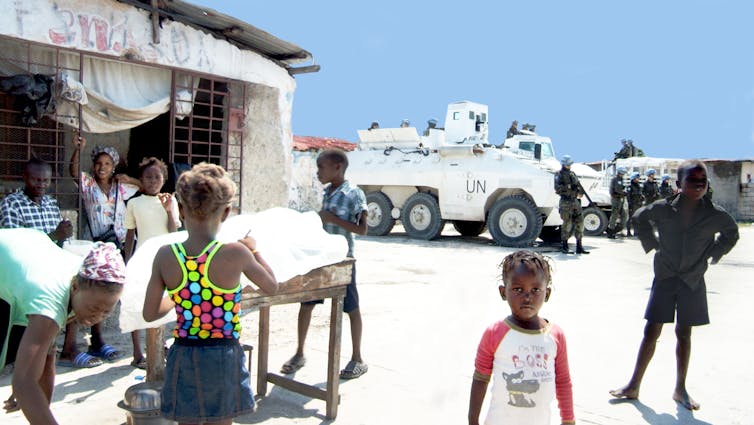
Keeping the peace?
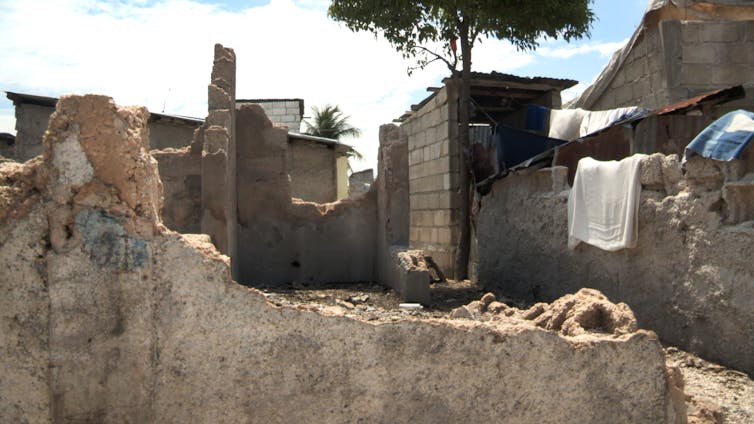
No accountability
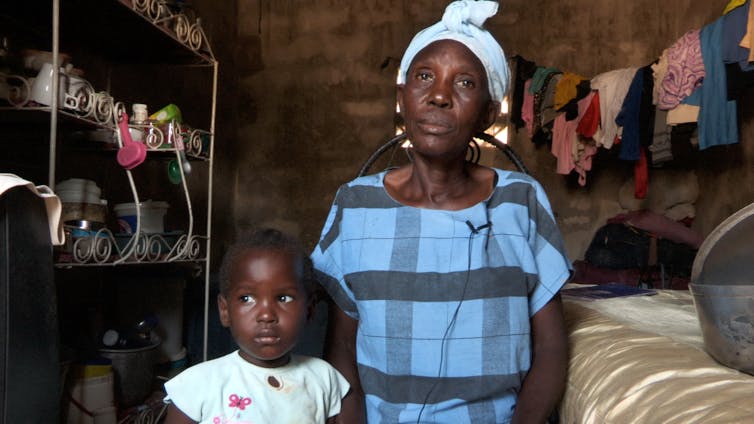
John A. Carroll, MD
www.peoriasmedicalmafia.com
www.dyinginhaiti.blogspot.com

Blog Archive


No comments:
Post a Comment